

Japanese-style Tattoo T-Shirt (rōmaji)
Black / S
$29.99
Sale price
$29.99
Regular price
Skip to product information


Japanese-style Tattoo T-Shirt (rōmaji)
$29.99
Sale price
$29.99
Regular price
Taxes included.
Shipping calculated at checkout.
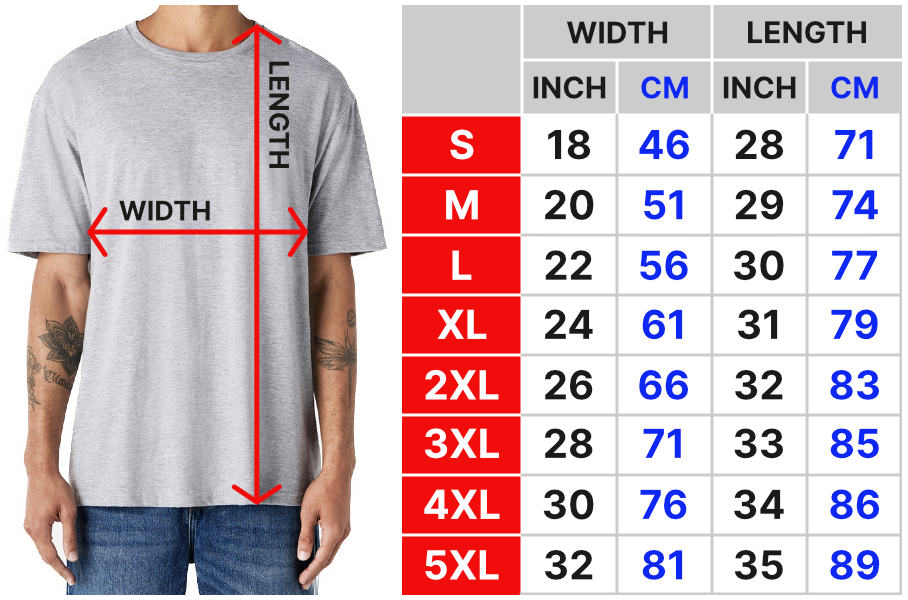
Size Chart

Made-to-Order
in the USA

Secure
Checkout
Product Details
- Premium Short Sleeve Graphic Tee
- Lightweight Cotton (4.5 oz/yd²)
- Modern Classic Fit & Seamless Body
- Vivid Print Remastered from an Original Japanese Masterwork
Fabric & Care
Premium Lightweight T-Shirt
- Modern classic fit / Crew neck / Rib collar.
- Double-needle sleeve and bottom hems.
- Lightweight: 4.5 oz/yd² / 153 g/m².
- OEKO-TEX certified low-impact dyes.
- DTG print with water-based NeoPigment inks.
Made with 100% Ring-spun Cotton
- "Sport Grey": 90% cotton / 10% polyester.
- "Antique" colours: 90% cotton / 10% polyester.
- "Graphite Heather": 50% cotton / 50% polyester.
- "Heather" colours: 35% cotton / 65% polyester.
- All other styles: 100% cotton.
Take Care of your Purchase
- Machine wash cold with like colours (max 30C / 90F).
- Do not bleach.
- Do not tumble dry.
- Do not dry clean.
- Do not iron.
- Line dry in shade.
- To minimize fading of the image, wash it inside out, in cold water, and avoid excessive washing.
Shipping & Returns
In an effort to maximise our design range, avoid over-production and waste, and offer you a competitive price, all of our products are made to order.
We ship worldwide with the best courier for your location.
Delivery time estimates shown below include production (2–4 business days) and standard shipping. Most packages arrive sooner than estimated.
- United States: 6-10 business days
- Rest of the World: 12-30 business days
Due to the custom nature of our items, we cannot accept returns or exchanges for wrong size, colour, or change of mind, however if your item arrives damaged or contains an error we will gladly replace it.
More details can be found in our full refund policy.
Artwork Details
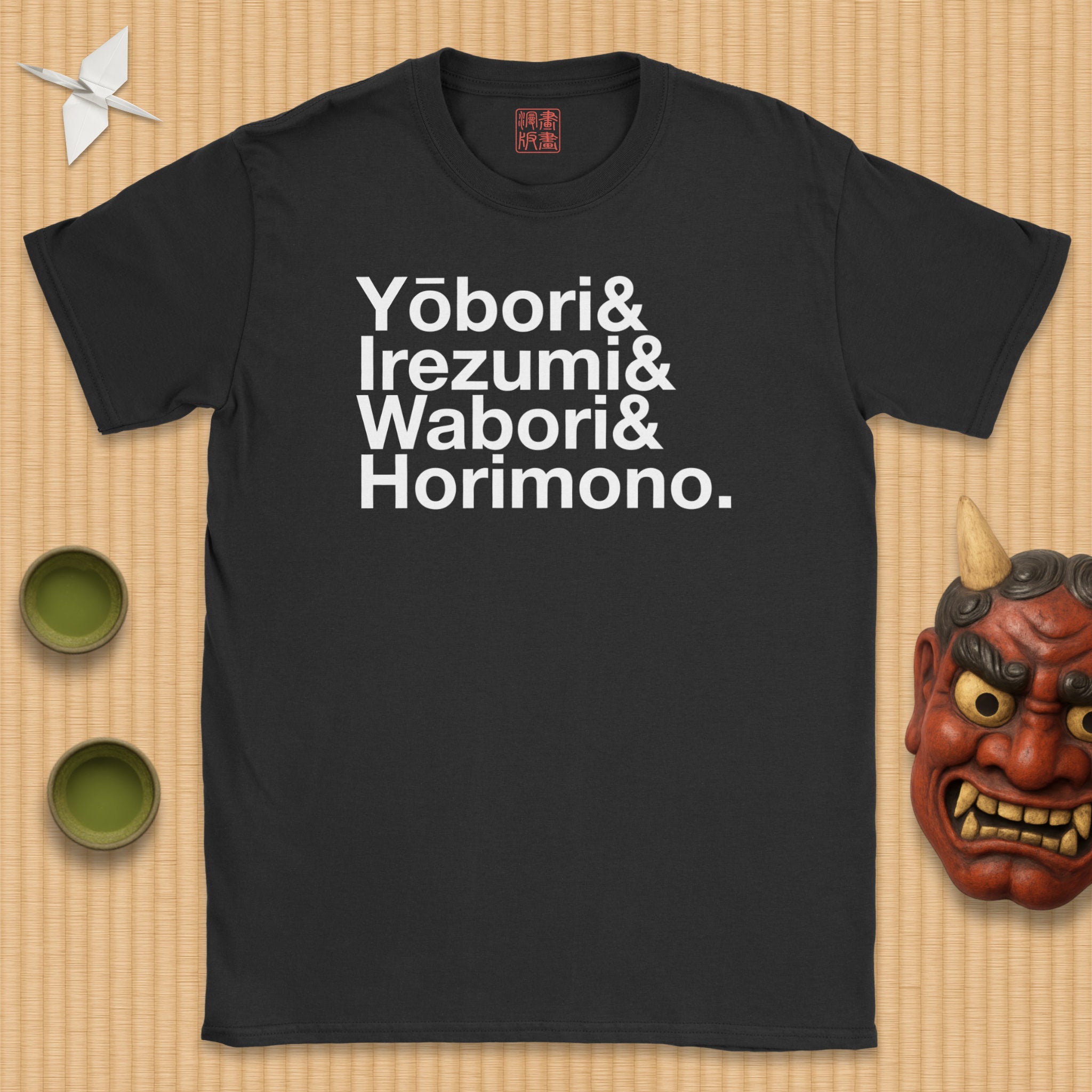
Do you call it yōbori, irezumi, wabori, or horimono? Four words for marked skin — and every one of them carries a different attitude.
Irezumi, literally "inserting ink," is the plain everyday word, and it's the one that drags a shadow behind it: for centuries it also named the marks punched into criminals as punishment, and that stain never fully washed out. It's the word lurking behind the "no tattoos" sign at the bathhouse and the shuffle away from you on the train.
Horimono — "carved thing" — is the exact same art with its chin up. It's the term the tattooers themselves reach for: not ink shoved under the skin but something carved, an image built by hand and earned over time, spoken of with the respect you'd give a woodblock or a blade. Where irezumi flinches, horimono stands proud.
The other two split the world by origin rather than by reputation. Wabori — "Japanese carving" — is the tradition itself: the full-colour, full-body classical style of dragons, koi, warriors and waves, worked to rules of flow and composition centuries in the making.
Yōbori — "Western carving" — is its opposite number, the imported machine-driven style from overseas, and the very reason the Japanese school ever needed to name itself in the first place. You don't get a word for "our way" until someone turns up doing it another way.
So it's a spectrum running on two axes at once: from the word that gets you barred (irezumi) to the word worn with pride (horimono), and from the home tradition (wabori) to the foreign import (yōbori). The same thing on your skin, four different ways of feeling about it — a whole history of stigma, defiance and quiet craft folded into four words. Which is about as much attitude as you can wear without opening your mouth.
洋彫り (yōbori, "Western-style") · 入れ墨 (irezumi, "inserting ink" — the loaded everyday word) · 和彫り (wabori, "Japanese-style") · 彫り物 (horimono, "carved thing" — the craftsman's term).
Manga Hanga (漫画版画)