

Horimoto Takatoshi T-Shirt
Black / S
$29.99
Sale price
$29.99
Regular price
Skip to product information


Horimoto Takatoshi T-Shirt
$29.99
Sale price
$29.99
Regular price
Taxes included.
Shipping calculated at checkout.
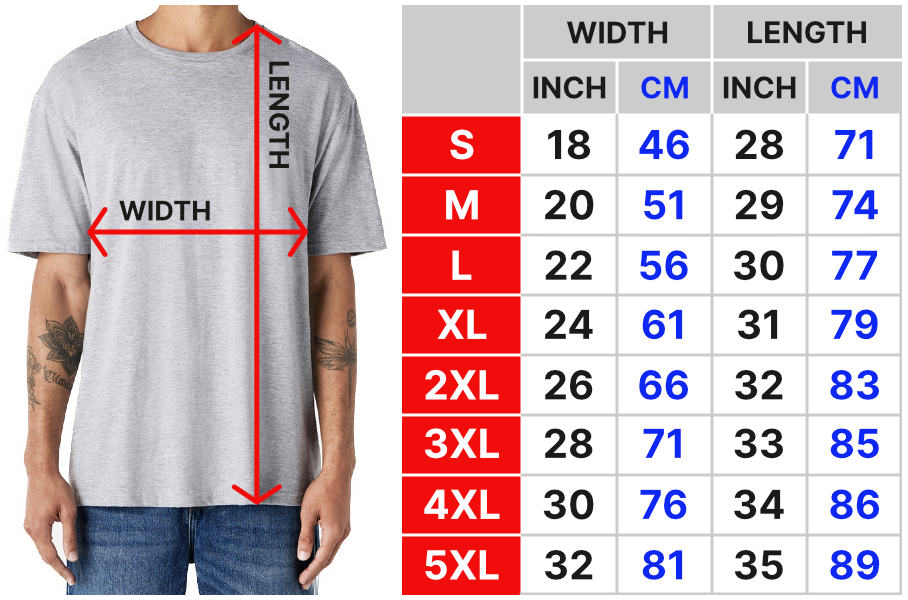
Size Chart

Made-to-Order
in the USA

Secure
Checkout
Product Details
- Premium Short Sleeve Graphic Tee
- Lightweight Cotton (4.5 oz/yd²)
- Modern Classic Fit & Seamless Body
- Vivid Print Remastered from an Original Japanese Masterwork
Fabric & Care
Premium Lightweight T-Shirt
- Modern classic fit / Crew neck / Rib collar.
- Double-needle sleeve and bottom hems.
- Lightweight: 4.5 oz/yd² / 153 g/m².
- OEKO-TEX certified low-impact dyes.
- DTG print with water-based NeoPigment inks.
Made with 100% Ring-spun Cotton
- "Sport Grey": 90% cotton / 10% polyester.
- "Antique" colours: 90% cotton / 10% polyester.
- "Graphite Heather": 50% cotton / 50% polyester.
- "Heather" colours: 35% cotton / 65% polyester.
- All other styles: 100% cotton.
Take Care of your Purchase
- Machine wash cold with like colours (max 30C / 90F).
- Do not bleach.
- Do not tumble dry.
- Do not dry clean.
- Do not iron.
- Line dry in shade.
- To minimize fading of the image, wash it inside out, in cold water, and avoid excessive washing.
Shipping & Returns
In an effort to maximise our design range, avoid over-production and waste, and offer you a competitive price, all of our products are made to order.
We ship worldwide with the best courier for your location.
Delivery time estimates shown below include production (2–4 business days) and standard shipping. Most packages arrive sooner than estimated.
- United States: 6-10 business days
- Rest of the World: 12-30 business days
Due to the custom nature of our items, we cannot accept returns or exchanges for wrong size, colour, or change of mind, however if your item arrives damaged or contains an error we will gladly replace it.
More details can be found in our full refund policy.
Artwork Details
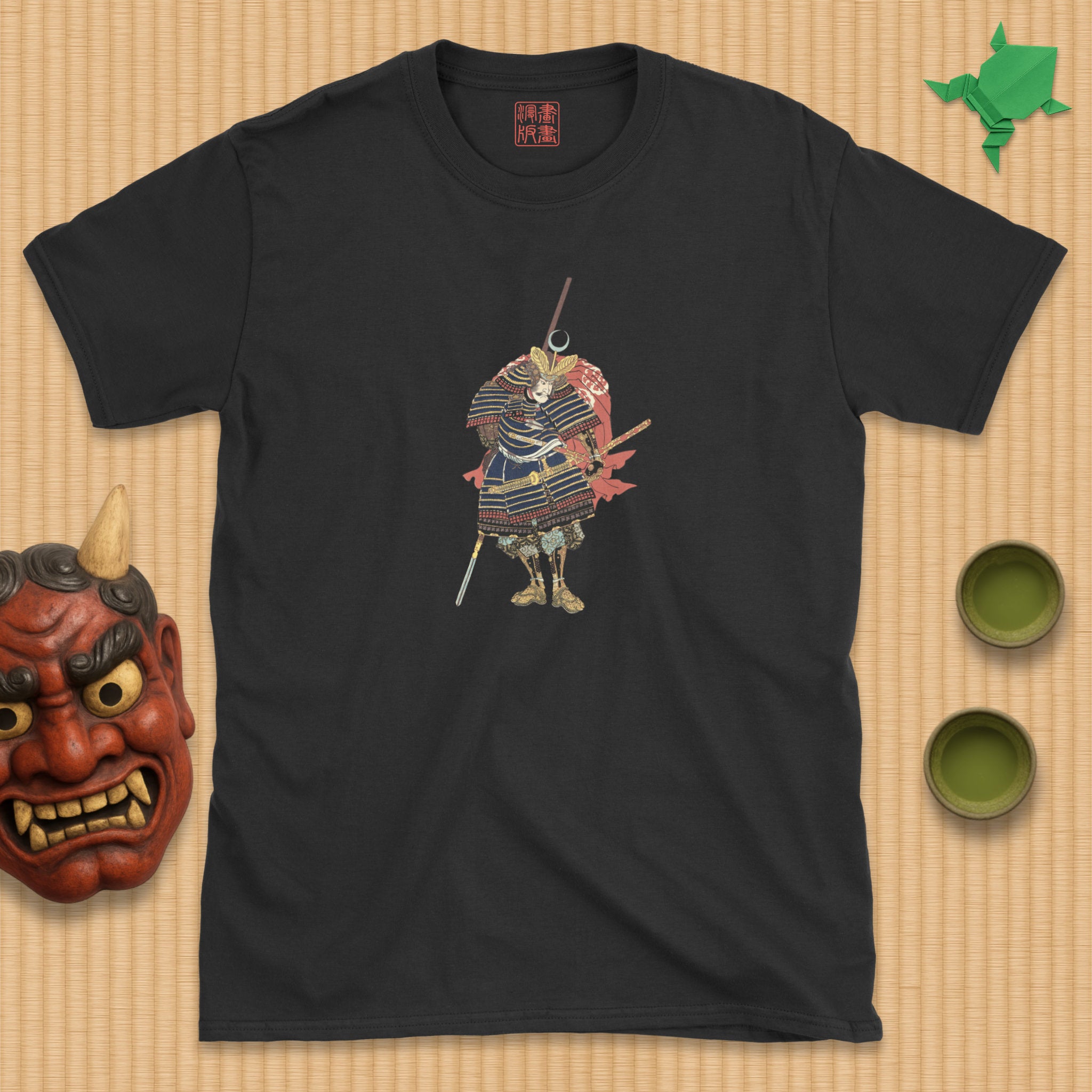
The samurai who treated an arrow like a splinter. Behind the stage-name Horimoto Gidayū stands a real warrior of Japan's bloodiest century — Morimoto Gidayū Hidetora, a retainer who fought in the Japanese invasions of Korea in the 1590s under the fearsome general Katō Kiyomasa. The story that earned him his portrait is a small masterpiece of samurai hard-headedness: in the thick of battle an arrow punched clean through his forearm, and rather than pull back, he coolly asked a comrade to haul the shaft out, then turned and kept fighting. No drama, no fuss — a man who treated a shaft through the arm as an inconvenience to be dealt with and got on with.
Kuniyoshi freezes him in exactly that moment of hard-eyed composure, studying the arrow skewering his own forearm with the mild annoyance of a bloke who's found a nail in his boot. It's the whole samurai ideal of stoic endurance — pain met with a shrug — distilled into a single unbothered glance.
He belongs to one of Kuniyoshi's cleverest projects, "Heroic Stories of the Taiheiki." The title is a decoy. The shogunate had banned artists from portraying the warlords of the recent age of unification, so Kuniyoshi dressed these sixteenth-century fighters in the borrowed name of an older, safely ancient war chronicle and nudged each man's name just off-true to slip past the censors — while every viewer in Edo knew perfectly well who was really being celebrated. "Horimoto" is the wink; Morimoto is the man.
Horimoto Gidayū Takatoshi (堀本儀太夫高利), from the series Taiheiki eiyuden (太平記英勇傳, Heroes of Taiheiki) 1848.
Utagawa Kuniyoshi (歌川国芳, 1798-1861)